Showing posts with label community design. Show all posts

Friday, September 26, 2014

SF Building Boom and Beyond- Millennials Are So Smart


I recently attended a panel discussion San Francisco 
Building Boom and Beyond. I actually came away inspired. 
As much bad news as there is regarding changes in affordability 
and diversity in our fair city, the good news is that new development
is focused, (as many of us idealistic greenies visualized 30 years ago
when downtown's were dying) around transit and walkable 
communities. I commend the perseverance of planners (including 
SF's heavily burdened Planning Department) and placemakers, in 
the face of multiple very complex issues. 


sfstreetsblog

One part of this that I found so inspiring is that the buildings with .5
or less parking spaces per unit sold out quickly. and continue to do
so. I know part of this is that people just need any place to live in 
San Francisco these days, but peak US driving was in 2006, and 
Americans have been driving less since then, even in this booming 
economy. This next generation is less car centric and is flocking to 
places where "your apartment is your bedroom and your community 
is your living room".  Small spaces are hip and design creativity is 
making more them pleasant to live in.  Life with a smaller carbon 
footprint can be fun!


As a Realtor I drive a lot, so I know I am a little hypocritical 
advocating transit, cycling and walking.  My bicycle commute 
was one of the best aspects of my previous work. Driving here 
can feel like a stressful and complex video game these days, 
and I'm sure I'm growing new neural pathways as more and 
more bicycles and pedestrians are on the roads, but these 
trends are here to stay. Hallelujah I say!


sfstreetsblog transbay terminal


Off work I get out of the car as often as possible, and always feel 
better for it. Transportation here is reaching peak usage. Walkers 
and cyclists take a lot of pressure off of existing transportation 
systems. Transportation infrastructure is phenomenally expensive, 
so this is one of the bigger challenges facing us as a city, but policy
is in place and we are moving the right direction on a number of
fronts. 


walksf.org


Call me a foolish optimist (I'm not the only one).  I know the 
problems we face are legion, and walk-ability, cycling and transit 
are not panaceas, but I feel more confident about the future as I 
watch the priorities of "kids these days" play out.


Happy Friday!


Friday, April 25, 2014

"Walking Shed"

This cool coffee shop walking shed map from MIT (which you should check out) was the first place I saw the term "Walking shed" used, though I've certainly rambled on about Walkability, here , here, and here.


Apparently Walking Shed is a thing already, also referred to as "ped shed" which makes sense, because duh, it just seems so obviously something we operate within. Though car dominated lifestyles have held sway during the past century, there is clearly a shift going on.

SFPUD

Until fairly recently in human history the draw for settlement orientation has been water, but now priorities are transportation, coffee, schools, restaurants, yoga studios... Where a property is within a walking shed has a huge effect on it's real estate value these days, with jobs,transportation portals, (including especially tech bus stops) at the top of the list right now.

Neighborland

and when you look objectively at how long it will take to walk vs. drive plus park...


Friday, March 1, 2013

Mission Creek


I'll be holding open a junior 1 bedroom condo at 888 7th Street on Sunday, 2-4. Since a segment of the Mission Creek Greenway and Bikeway is located on the site, and just for the sake of watershed awareness, I took a look at site on the super cool watershed finder put together by the Oakland Museum. 

Oakland Museum
DeeDee posted this about the new park, under some of which the creek still flows. Here is the big picture to come, and if the freeway actually comes down, wow! The unit I'll be holding open faces the big curve with the mural on the Cal Train tracks. You've gotta like trains, and I do. It's a cool curvaceous industrial view, sparkly at night with the Bay Bridge view. Come by and see me Sunday, and then take a walk in the park.

True Mosaics


Postscript: In chatting with my sister, who works at Adobe, whose SF headquarters is right next door, we got curious about the Baker and Hamilton building.  She came up with this this link, which has lots of fun links, explaining, for example, why the train track curve is there.


Friday, January 25, 2013

Pavement and Runoff


This morning 3 different friends posted this article, about people paving their yards.  As a young and passionate plant ecologist I fled to the wilds of West Marin, wanting to be far away from paved over cities. Now I have been lured back, and love being in San Francisco for so many reasons. My transition was eased by the abundance of parks and wildlands in and around our beautiful city, and by the resurgence of urban farming, and other plant positive policies.  Plants are awesome, and are good for real estate values too. Cities are finding that chronic water pollution problems can be mitigated with green infrastructure.


EPA


Pavement to Parks and Friends of the Urban Forest are places to start if you want a little help transforming your paved over spaces. Keep in mind the mature size of anything you plant, and the importance of planting the right tree in the right place, and if you really MUST pave, consider permeable paving option.

Then when the rain comes down it can sink into the earth, and grow things, rather than roll on into pipes, gathering grossness along the way, and pour out in to our beautiful bay and ocean.


Wednesday, August 1, 2012

Walk Appeal

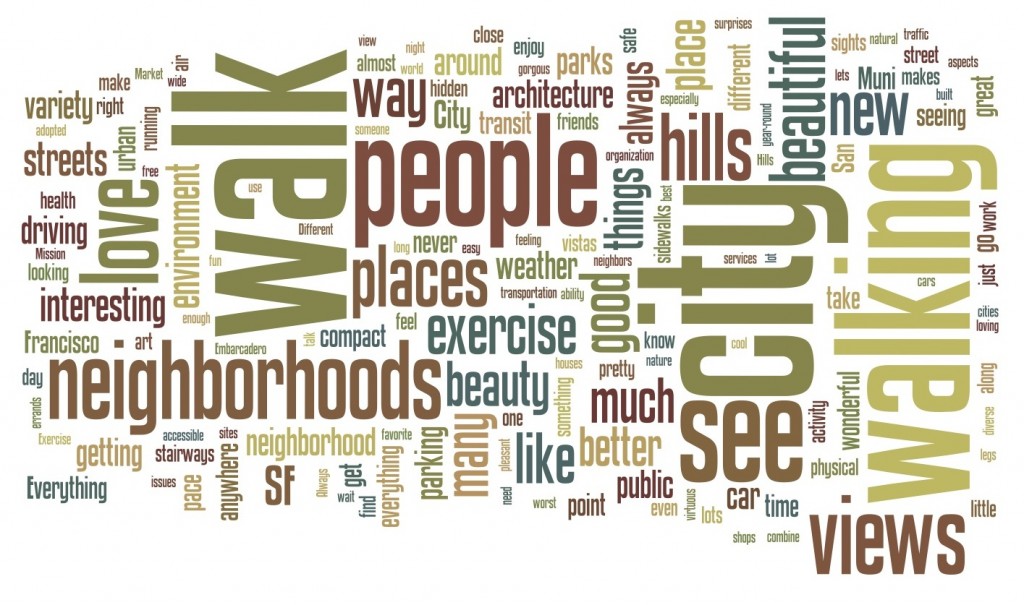
This terrific blog post from Better Cities and Towns, illustrates so well the truth that distance is less important than high levels of "walk appeal", such as we have in so many San Francisco and Marin neighborhoods. Streetsblog also addresses this. We know this intuitively, and walk appeal is fueling higher real estate values in walkable neighborhoods. People who live in places they are drawn to walk are generally healthier.  If you are new to San Francisco, or even if you're not, check out City Guides, they do free and awesome walking tours.

CityGuides
We will walk for miles if the experience is interesting, dynamic, and human scaled.  Also, we will walk for miles on lovely trails, which SF and Marin have in abundance. OK, time to get away from the computer and go for a walk!

Tom Killion


Thursday, July 26, 2012

"New Urbanism" Awesomeness in the City


CurbedSF

So much of what makes San Francisco (and Marin) wonderful can be filed under "New Urbanism,"  which is quite often the resurrection of old urbanism, before cars took over the universe. Now of course, as a realtor, I have and use a car, but I'm also a pedestrian and cyclist and plant lover, and a big fan of making cities more livable. Cities around the world are revitalizing using these principles, and San Francisco is definitely on the vanguard.

Cycle Chic


Today's San Francisco examples: here and here. Copenhagen has been at this for decades.  Marin, while not quite urban, does have concentrated town centers, often surrounded by protected wildlands, more on Marin in another post.

StreetsBlog

Sunday, July 1, 2012

Walkability Trumps Square Footage


Some dear friends recently gifted me with a fit bit, which is a fancy pedometer. The process of tracking how many steps I take (goal is 10,000 daily steps) is surprisingly energizing. Walking in this city (and Marin's towns and parks) is so entertaining, and so much less stressful then driving. Plus I can eat freely in this place of unlimited good food choices. Even when I have to drive for work, I find myself enjoying parking a little further from my destination, so I'll rack up a few more steps. Ridiculous I know, but so invigorating. So today we revisit walkability. 


SustainableCitiesNetsustainablecitiesnet

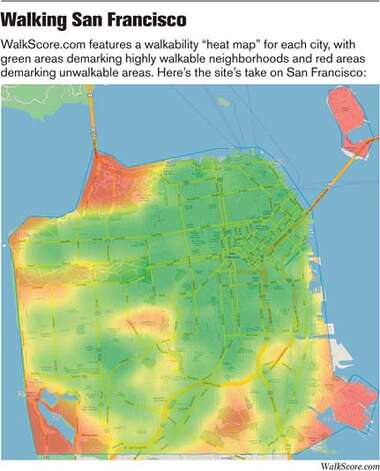
The National Association of Realtors Community Preference Survey concluded that most Americans now prefer a walkable neighborhood to a large house.  People are willing to pay more  for a location that allows them to walk or bike rather then drive everywhere.  San Francisco has recently been declared the "most walkable" city in the U.S.  Marin is pretty wonderful for walking too, and hiking.  

SFStreetBlog.org

P.S. Tomorrow is Sunday Streets in the Mission District, "a cost-effective way to improve the health of San Franciscans," as Mayor Ed Lee put it.  Plus way fun.


SFStreetsblog.org

Friday, March 23, 2012

Build It Green - Community Design

OK, our final component of a green home, Community Design, and then we can get back to microclimate and trees.  While improving the efficiency and health of a tract home in a large suburban sprawl development is a good thing, even better is good community design in the first place, or adaptation of less efficient community structure to concentrate services, improve pedestrian access and expand open space.

SFStreetsBlog
"Livable communities enhance the quality of life while reducing impact on the environment. Pedestrian and bicycle friendly neighborhoods provide opportunities for exercising and meeting neighbors.  High density areas where work, shopping and school are all close by allow for less time driving and fewer greenhouse gas emissions from cars." The "new urbanism" everyone's transforming old cities with these days is our 5th green home component. There are multiple benefits to human and environmental health, not to mention enhanced real estate values.

SafeRoutesToSchools
 One of the major attractions of Marin and San Francisco is the abundance of open space adjacent to wonderful walkable communities. While a Google search will turn up conflicting rankings of healthiest cities, our fair metropolis is often touted as the "most walkable".  Preservation efforts, both of wildlands and historic character, by many valiant individuals over the years, have enhanced the quality of life here immeasurably. Worthy organizations such as SPUR, the Marin and San Francisco Bicycle Coalitions, Safe Routes to Schools and many others, continue to work to improve our communities usability and quality of life.


Livablecities.org