Showing posts with label Build It Green. Show all posts

Friday, March 23, 2012

Build It Green - Community Design

OK, our final component of a green home, Community Design, and then we can get back to microclimate and trees.  While improving the efficiency and health of a tract home in a large suburban sprawl development is a good thing, even better is good community design in the first place, or adaptation of less efficient community structure to concentrate services, improve pedestrian access and expand open space.

SFStreetsBlog
"Livable communities enhance the quality of life while reducing impact on the environment. Pedestrian and bicycle friendly neighborhoods provide opportunities for exercising and meeting neighbors.  High density areas where work, shopping and school are all close by allow for less time driving and fewer greenhouse gas emissions from cars." The "new urbanism" everyone's transforming old cities with these days is our 5th green home component. There are multiple benefits to human and environmental health, not to mention enhanced real estate values.

SafeRoutesToSchools
 One of the major attractions of Marin and San Francisco is the abundance of open space adjacent to wonderful walkable communities. While a Google search will turn up conflicting rankings of healthiest cities, our fair metropolis is often touted as the "most walkable".  Preservation efforts, both of wildlands and historic character, by many valiant individuals over the years, have enhanced the quality of life here immeasurably. Worthy organizations such as SPUR, the Marin and San Francisco Bicycle Coalitions, Safe Routes to Schools and many others, continue to work to improve our communities usability and quality of life.


Livablecities.org

Thursday, February 16, 2012

Build It Green - Energy Efficiency

OK, here goes. My brief synopsis, one per post, of the 5 main components of a "green" home: Energy Efficiency, Indoor Air Quality, Water Conservation, Resource Conservation and Community Design.

Today's topic is Energy Efficiency, which the Build It Green folks call the "Cornerstone of Green"


RemodelingContractorTips.com

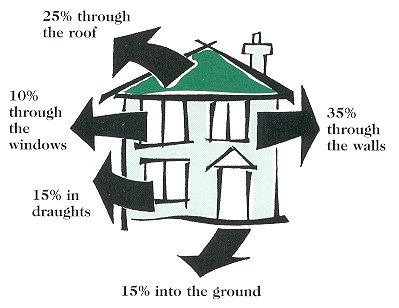
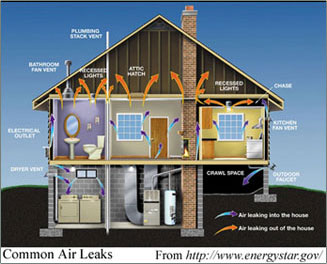
Energy efficient homes are less drafty, quieter and less expensive to heat then less efficient homes. They demand less from California's power grid and reduce your homes impact on climate change. They also "sell faster and fetch higher prices."

As the SF Department of the Environment points out, how we use energy is as important as how its produced and where it comes from (here are resources for energy efficiency in Marin). Improving your homes energy efficiency can be as simple as installation of weather stripping, upgrading insulation or installing a set back thermostat or a Nest thermostat. Conducting an energy assessment, or audit, is the best way to get the big picture, which can guide you to the most bang for your buck. 

Energy Detectives

You can do your energy assessment yourself, if you are inclined that way, or you can enlist the services of a professional, who has specialized equipment and can do a blower test and thermographic scan (aka infrared scan), which will give you a pretty picture of your home and where it is leaking heat (or where there is moisture, but that's for another post).  Energy Upgrade California is your "one stop shop for home improvement projects that lower your energy us, conserve water and natural resources and make your home healtier and more comfortable."  Plus they offer rebates (which vary by city/countyto encourage such fabulous behavior.


Tuesday, February 7, 2012

Build It Green


Last week I spent a couple of days at a Build It Green training, deepening my understanding of what it really means to call a building green. As many of you know, the biggest producer of greenhouse gases is not cars, but buildings. The good news is that there are many green buildings in San Francisco and Marin. Much of the new construction, especially in the city, is LEED Certified at various levels.


GreenDiary

While living walls and roof's and sleek post post modern design are pretty cool, and attract a lot of the green building press, there are also very effective, though less glamorous, ways to make a home greener. There are many small adjustments that can be made to existing buildings, at relatively low expense, to make them more comfortable, cheaper to operate, healthier to live in and better for the planet. Of course these improvements also add value to your home.


In the next few posts I'll elaborate on the 5 main components of a green home: Energy Efficiency, Indoor Air Quality, Water Conservation, Resource Conservation and Community Design.