Showing posts with label san francisco marin real estate. Show all posts

Wednesday, November 19, 2014

Flipping and Building Edges

OK finally the promised the more affordable version (if anywhere in San Francisco can be considered "affordable") of the pattern "building edges" and "light on 2 sides."  I'll keep looking for smaller, thriftier examples of this pattern to share, because it truly does not apply exclusively to expensive homes.

Common expressions of this pattern when buildings are smack up against each other are bay windows or center patio's.

World of Stock


Lately I've been struck by the skillful adjustment of building edges in remodels such as 162 Randall  (floor plans are on the "Description" page).  The views were already jaw dropping, but  the addition of skillfully located decks, windows and sliding glass doors throughout the home brought the views and light into almost every room and radically improved it's livability and beauty.


The gin probably helps that too.

Many of the remodels I see dismay me with their lack of respect for the beautiful old architectural detail. This one does fall in this category somewhat and is laid out better for entertaining than for family life, so I'm not 100% in favor, but it does speak to what wonderful improvements can be made by adjusting building edges.


I think the best remodels keep the historic detail and integrity where possible, while opening up dark and convoluted floor plans to allow for how we live today. Truly rehabilitating the building and it's systems where needed (foundation, electrical, plumbing, roof, heating systems) seems the more noble (albeit expensive and often invisible) path, vs. the quick flip that adds little value.


and that's your rainy Wednesday opinion. Cheers!


Friday, October 10, 2014

Tuesday Tour Tidbits - Building Edges


Sometimes it's a bad idea to look at the highest end homes at the beginning of tour, they can make everything else seem a little less fabulous. I believe in "pattern language" though, so next Tuesday I'll look for these patterns (in this case "light on at least two sides" and "building edge") at lower price points. Good architecture can make spaces beautiful and livable at any price level. For today though, here's some high end glory.


Claudia taking in the view from one of many terraces of the beautifully updated 65 Montclair Terrace, on Russian Hill. Designed by Gardner Dailey, this place is so wonderfully organized to the light and views (!) and livability. Recently we've been discussing the kinds of properties that look incredible from the outside but inside can be dark or poorly laid out or cramped, vs. the kind that look a little boring or at least not epic from the outside but are bright and beautiful and livable on the inside. More on this later. This one isn't at all boring from the outside, but inside it's truly amazing, and my photo's really don't capture it fully.


Ok so it's staging, but how fun would this be! and to the immediate 
left are french doors to walk out terrace, and behind me the wonderful kitchen, and the views! Making the guest list in my mind...


This one is taken from 2680 Green St, another amazing remodel ("to the highest sustainability standards,"  in Pac Heights. Roof gardens always get me, and how about that view?

Happy Friday!


Friday, February 8, 2013

More Ginormous Tide Swings


OK, one more chance to check out the flooding potential for neighborhoods you are considering, the last King Tides for 2013 are happening right now.

NWS FB page

King Tide lows are a great time for tidepooling and beach walking too, just be careful not to get trapped by the tide, and please don't go in  after your dog.

Lost Coast Outpost

Sunday, October 28, 2012

Water Intrusion, Take 2

Will and Guy
Our Broker spoke to a packed house at Zephyr last week, sharing "war stories", though, given the season, and the nature of the stories, it was really more "scary stories" about what could possibly go wrong in a real estate transaction, that might lead to a lawsuit.


Number One subject of lawsuits?  Water intrusion. Given my last post, I thought I'd better follow up with more encouragement to clean those gutters, keep an eye out for plumbing and window leaks (repair asap!), and read your disclosure packages carefully. Number Two is square footage, which is why you often will not see a number in marketing materials, but that's for another post.


Sunday, July 1, 2012

Walkability Trumps Square Footage


Some dear friends recently gifted me with a fit bit, which is a fancy pedometer. The process of tracking how many steps I take (goal is 10,000 daily steps) is surprisingly energizing. Walking in this city (and Marin's towns and parks) is so entertaining, and so much less stressful then driving. Plus I can eat freely in this place of unlimited good food choices. Even when I have to drive for work, I find myself enjoying parking a little further from my destination, so I'll rack up a few more steps. Ridiculous I know, but so invigorating. So today we revisit walkability. 


SustainableCitiesNetsustainablecitiesnet

The National Association of Realtors Community Preference Survey concluded that most Americans now prefer a walkable neighborhood to a large house.  People are willing to pay more  for a location that allows them to walk or bike rather then drive everywhere.  San Francisco has recently been declared the "most walkable" city in the U.S.  Marin is pretty wonderful for walking too, and hiking.  

SFStreetBlog.org

P.S. Tomorrow is Sunday Streets in the Mission District, "a cost-effective way to improve the health of San Franciscans," as Mayor Ed Lee put it.  Plus way fun.


SFStreetsblog.org

Wednesday, May 23, 2012

Spring Winds


GGNPC

Please forgive my blogging sloth, I've gotten just a little bit involved (bless all the busy bees who are doing the real work) in the run up to the big celebration for the Golden Gate Bridge's 75th birthday, and real estate has been very interesting and time consuming of late. Also my grand plan to summarize micro-climate by real estate zone has been a little more complex then I first realized. It is pretty easy to do for places one has lived, but is harder to summarize accurately based on visits, as it changes with the seasons and the level of intensity in the fog cycle. Of course now we are firmly in the spring wind upwelling cycle which can be a little exhausting, though it is the reason we have such abundant sea life all around us.


My new plan for the area's I have not lived to is take walks with local experts to confirm my theories. While I am obviously obsessed with microclimates, and hope to provide helpful guidance, it is always a good idea to chat up the neighbors when you are looking at property. If you are a gardener, look at what plants are flourishing in the immediate surroundings. Even if plants are not your thing - befriend that long time resident with the well established garden, they will know the climate better then almost anyone.

Kate Campbell

Today's brief microclimate summary: Using my cool Weather Underground app and clicking on the weather station icon (online works also)   I see that it is 57 degrees with 33 mph NW winds blowing (gusting to 45 I would wager) at the Outer Richmond weather station. It is 69 degrees with minimal wind in the Financial District. I can also hear the roar of the wind and creaking of the building I am in near the beach. You can bet it is howling at the bridge. Forecasts predict the wind will mellow before the party, but bring your layers if you're coming.

Anne+MathiasMywedding.com

Friday, May 11, 2012

Macro Microclimate

Sometimes it just comes down to foggy at the coast, and clear inland. Simple as that.


Everything more micro is nuance, as the fog, wind and topography do their dance. Happy Friday folks, hope your climate suits you this evening.

Photo via

"This is a Visible Satellite image. Most images you see are Infrared images which use tempertures to create clouds. Visible Satellites just flat out take a photo graph. "


Thursday, April 12, 2012

The Bloom Continues - Native Plants and Succulents


My case of spring fever continues. So, apropos of microclimate perhaps more than real estate, here's a heads up on some weekend events for the plant minded. The California Native Plant Societies SF (Yerba Buena) Chapters Annual Garden Tour takes place this Sunday from 11-3, and it is a great opportunity to look at what grows well, where, in San Francisco.

Gwen Kelaidis Saxon Holt

On Saturday, from 10-4, in Marin, is the 36th Annual Native Plant Sale and Nursery Grand Opening. Also, Saturday in the Outer Sunset, the aforementioned Far Out Flora folks are having their moving sale, it starts at 9:00.

 
PlantedEarth
Native plants and succulents are often drought tolerant and tough, and do well in our climate with minimal care. Not to mention that many are SO gorgeous.

Wednesday, April 4, 2012

Spring Flora!


All this rain has sure greened things up at last. Birds singing, flowers blooming, time to garden! I was so sad to learn recently that the Far Out Flora bloggers are moving back to Wisconsin. Their enthusiasm and skill with plants adapted to Bay Area microclimates  is so inspiring. Their garden is/was in the Outer Sunset in  San Francisco. Meghan worked in Richmond at Annies Annuals and Matti worked at Flora Grubb Gardens  on the sunnier east side of SF in the Bayview.  Two of my favorite nursery's, so creative both Flora and Annie.  Their exposure to what really works in these seriously differing microclimates, plus their artistic backgrounds, make them a wonderful resource, and they will be seriously missed.

SF Botanical Garden

As a plant ecologist for years, I kept my passion for flashy horticultural joys a little under wraps, in favor of our magnificent native flora. These days, I can freely appreciate the beauty and function of "cultivars" ("a race or variety of a plant that has been created or selected intentionally and maintained through cultivation") as well as our lovely California wildflowers.

Alan Grinberg Mori Point

Speaking of cultivation, mark your calendars for the largest plant sale in California,  at the San Francisco Botanic Garden (Strybing). Also, the Larner Seeds awesome native wildflower demonstration garden in Bolinas is going off, if you feel like a field trip. Here are more resources for growing native plants, and here, here and here are resources for field viewing of the spring bloom.

BAWSCA


For you many food growers, Golden Gate Gardening is so helpful for our microclimates. As is the latest version of the Sunset classic Western Garden Book, which now has a plastic cover, the better for using with muddy hands. Their climate zones are more useful here than those of the USDA, being finer grained and including humidity, latitude and elevation, which give you a clearer idea of what you can really grow. They also have a fun on-line plant finder.

Happy Spring!

DavesGarden Cottage Garden Xeriscape

Friday, March 23, 2012

Build It Green - Community Design

OK, our final component of a green home, Community Design, and then we can get back to microclimate and trees.  While improving the efficiency and health of a tract home in a large suburban sprawl development is a good thing, even better is good community design in the first place, or adaptation of less efficient community structure to concentrate services, improve pedestrian access and expand open space.

SFStreetsBlog
"Livable communities enhance the quality of life while reducing impact on the environment. Pedestrian and bicycle friendly neighborhoods provide opportunities for exercising and meeting neighbors.  High density areas where work, shopping and school are all close by allow for less time driving and fewer greenhouse gas emissions from cars." The "new urbanism" everyone's transforming old cities with these days is our 5th green home component. There are multiple benefits to human and environmental health, not to mention enhanced real estate values.

SafeRoutesToSchools
 One of the major attractions of Marin and San Francisco is the abundance of open space adjacent to wonderful walkable communities. While a Google search will turn up conflicting rankings of healthiest cities, our fair metropolis is often touted as the "most walkable".  Preservation efforts, both of wildlands and historic character, by many valiant individuals over the years, have enhanced the quality of life here immeasurably. Worthy organizations such as SPUR, the Marin and San Francisco Bicycle Coalitions, Safe Routes to Schools and many others, continue to work to improve our communities usability and quality of life.


Livablecities.org

Sunday, March 18, 2012

Build It Green - Resource Conservation

Dreamstime
In part 4 of our series on what makes a green home green, according to Build It Green, we are going back to the 3R's: Reduce, Reuse and Recycle, which all add up to Resource Conservation. 

TerraMai

Whether remodeling or building new, there are cost, waste and energy savings to be had through resourceful use of materials, smart construction and efficient design. Admittedly, it can cost a lot more in labor to save old materials during demolition, and re-use them, so it's often a judgement call whether materials are realistically salvageable. "Adaptive reuse has long been praised for being a sustainable form of development that reduces waste, uses less energy, and scales down on the consumption of building materials. However, beyond these environmental benefits, reuse projects may also have the ability to foster a greater sense of community and provide a springboard for the economic growth of a neighborhood."

HistoricPreservationBlog
Historic materials lend real heart and charm to new or reconstructed buildings, which can increase value enough to be worth the extra effort and cost required to salvage rather than start fresh. Wide plank floors are particularly beautiful, and many old structures in our area were built with amazing old growth redwood and fir, and of course all the crazy gorgeous millwork, and tin work etc. are absolutely worth saving.

FoundSF

The planters on the front deck of the beautifully remodeled 1566 Sanchez  for example, (Slide 16 of exteriors), are sheathed in lath from the original roof. This particular wonderful remodel was done by eco+historical aiming for LEED Platinum, so there are countless green features, no doubt they would prefer I highlight something less cosmetic then reuse of the lathe. For that I refer you back to the websites, as they are beautifully detailed there and there.

Next post we'll look at some more affordable expressions of Resource Conservation, for the DIY or thinner wallet set. Given that necessity is the mother of invention...

Monday, February 20, 2012

Warren Hellman's Farewell and Microclimate

Yesterdays miraculous beauty out at the beach for Warren Hellmans Memorial concert was such a gift. So many transcendent moments.  Not least among the gifts was the microclimate I was blessed to share with friends at the Banjo Stage, which had its back to the wind.


Funcheap


I'm such a microclimate nerd that I found a perfect lessons on the basics of golden gate microclimate at a beautiful memorial event (please forgive me Warren).

Wikipedia

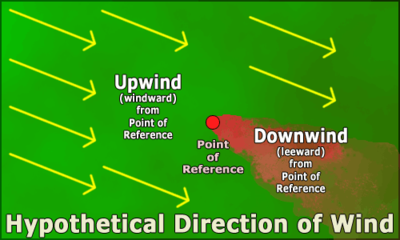
Cold NW Wind, less beastly then the day before, nevertheless slowly built throughout the day. Our location was in the lee of the sturdy tent that was the Banjo Stage, just to the south of its shadow, and therefore with my back bathed in sun, and my face sheltered from the wind. In the Brant Ward photo below our spot was between the stage and the sound board.

The Chronicle


A visit to the banners, (along the fence at the end of Golden Gate Park) with all the pictures of Warren and his life, had me putting my jacket and scarf back on. Then taking them off again when back to our spot in the warm lee of the tent, no doubt annoying my friends with my repeated glee about our locations microclimate.

Warrens Banners

Microclimate really is micro. It is true that it is generally warmer on the east side (in the lee) of Mt. Tam and Twin and other peaks, but within each neighborhood, each block, each property, even each house there are warmer and cooler, sheltered and less sheltered spots. If you live here you know this already, if only unconsciously. When making the major investment of golden gate real estate, you'll be glad if you think about microclimate consciously before closing escrow.

Thursday, February 16, 2012

Build It Green - Energy Efficiency

OK, here goes. My brief synopsis, one per post, of the 5 main components of a "green" home: Energy Efficiency, Indoor Air Quality, Water Conservation, Resource Conservation and Community Design.

Today's topic is Energy Efficiency, which the Build It Green folks call the "Cornerstone of Green"


RemodelingContractorTips.com

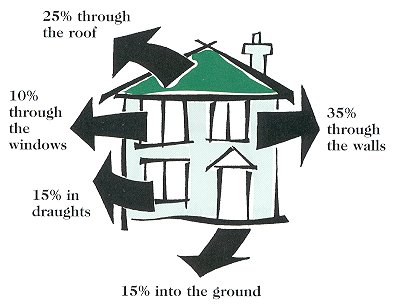
Energy efficient homes are less drafty, quieter and less expensive to heat then less efficient homes. They demand less from California's power grid and reduce your homes impact on climate change. They also "sell faster and fetch higher prices."

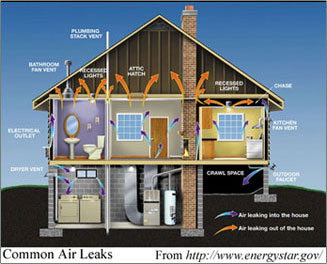
As the SF Department of the Environment points out, how we use energy is as important as how its produced and where it comes from (here are resources for energy efficiency in Marin). Improving your homes energy efficiency can be as simple as installation of weather stripping, upgrading insulation or installing a set back thermostat or a Nest thermostat. Conducting an energy assessment, or audit, is the best way to get the big picture, which can guide you to the most bang for your buck. 

Energy Detectives

You can do your energy assessment yourself, if you are inclined that way, or you can enlist the services of a professional, who has specialized equipment and can do a blower test and thermographic scan (aka infrared scan), which will give you a pretty picture of your home and where it is leaking heat (or where there is moisture, but that's for another post).  Energy Upgrade California is your "one stop shop for home improvement projects that lower your energy us, conserve water and natural resources and make your home healtier and more comfortable."  Plus they offer rebates (which vary by city/county) to encourage such fabulous behavior.


Tuesday, February 7, 2012

Build It Green


Last week I spent a couple of days at a Build It Green training, deepening my understanding of what it really means to call a building green. As many of you know, the biggest producer of greenhouse gases is not cars, but buildings. The good news is that there are many green buildings in San Francisco and Marin. Much of the new construction, especially in the city, is LEED Certified at various levels.


GreenDiary

While living walls and roof's and sleek post post modern design are pretty cool, and attract a lot of the green building press, there are also very effective, though less glamorous, ways to make a home greener. There are many small adjustments that can be made to existing buildings, at relatively low expense, to make them more comfortable, cheaper to operate, healthier to live in and better for the planet. Of course these improvements also add value to your home.


In the next few posts I'll elaborate on the 5 main components of a green home: Energy Efficiency, Indoor Air Quality, Water Conservation, Resource Conservation and Community Design.


Tuesday, January 31, 2012

Natural Hazard Disclosures

Free stock photography

Making an offer or going into contract on a property in California, and especially in San Francisco, your first  major document review will be of the (sometimes an inch thick) property "disclosures".  Some listing agents will request a signed disclosure package be submitted with the offer; in any event the signed document is often due quite early in the contingency period.


Schooner Property
In the rush of putting in an offer, it is easy to skim this dense document without really comprehending what's in it. Fear not! This is one place your agent can really offer value, helping  you to filter the truly property specific information from what is boiler plate legalese, so you'll know what is really important to understand before you commit to a contract and start spending money on inspections. 


Liquefaction Hazard Maps

Of most relevance to this blogger, as your earth based realtor, is the Standardized Natural Hazard Disclosure Report, which details the possible risk of floods, fires, earthquakes, liquifaction, and landslides occurring at the  property. At the risk of sending you to a competitor, here's a link to a nice summary of how to review the Natural Hazards report. When a property is listed, the agent orders this report from one of several companies that search the hazard maps and lists the hazards that are potential issues with that specific property. Also, there is the Combined Hazards Book, which you'll need to review and sign off on during escrow.


Disclosure Booklets

 If you are the kind of person who likes to educate yourself ahead of time, you can look at hazard maps yourself (see links in my past posts re: slope and extreme weather  and also in the resource bar) for the areas you are considering. Ponder your level of comfort with various environmental risks, do a little insurance research, and you'll feel more prepared to make an informed purchase.


Putting Down Roots in Earthquake Country