Showing posts with label san francisco real estate. Show all posts

Friday, July 11, 2014

Gloriously Eclectic Architecture

Arctic Garden Studio

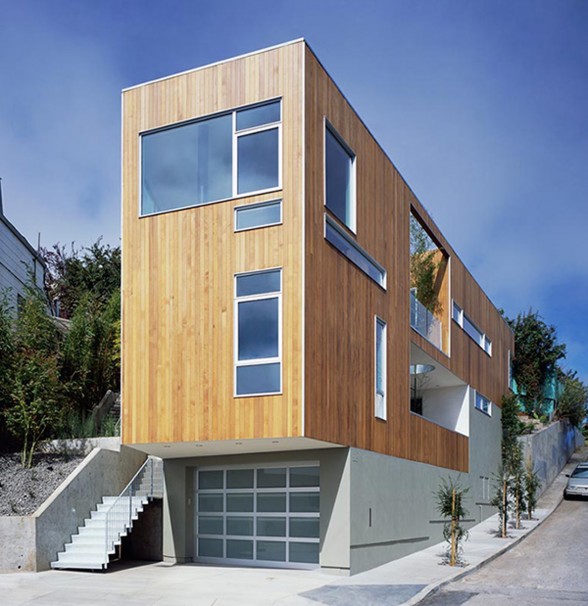
Touring new listings this week with several agents, one new to town, the question arose - how do you tell Victorian from Edwardian? A memory trick I picked up somewhere is that Victoria was a woman, and the style is pretty fancy and curvy, while Edward was a man, and the style is simpler and more square.


Of course it's soooo much more complicated then that. Here's some wonderful video from the amazing James Dixon that gives a good overview of Victorian and Edwardian and San Francisco's multiple other architectural styles: When and Why Styles Changed. The short answer to why so many styles over time is the intersection of architectural fashions and cyclic economic booms.


Paragon Victorian Edwardian


If you like to read text and see still images, look here for Victorian and Edwardian periods. 


James Dixon Architect


The SF Department of Planning's Preservation Bulletin #18 (scroll down a bit for photos) also has lots of great photo's and details about the many styles and periods of San Francisco architecture.
and lest we forget the avenues out there in the fog, here's a link to your Doelger styles.

Curbed - Planning Sunset District Historic Resources


Information on more modern styles, from 1920 forward, can be found here.  So there you have it, now you can impress your friends.          
house.com


Happy Friday!


Friday, September 27, 2013

Yo prosperous artists! and artistic history buff lookie loos!


I have walked down Francisco in North Beach and wondered so many times what was behind the orange door... so when it was open on Zephyr tour this week I was so happy to look inside- and find high ceiling-ed side by side art studios, with a little yard that opens onto the cute alley behind.


So I must diverge from the earth based real estate and rave a little about this place, alas not my listing, go Stephano) which was "built by Henry Temple Howard for renowned local artists Adaline Kent and Robert Boardman Howard. The studios remained the creative hub for their painting, sculpture, family and community for over four decades."  
         

"The fireplace chimney reliefs are the actual plaster models for the large bronze fireplace-in-the round made by Howard, originally for the Badger Pass Lodge, and now located at Yosemite Lodge". He also painted the mural in the mural room.
                                                                    

Such a high bright wonderful space, a large scale sculptor or painters dream. It's open 2-4 Sunday, Sept 29, if you want to see a special piece of SF history while you can, it should be a gorgeous weekend in North Beach.

Oh, and if you are even more prosperous, here's another amazing space for art...

Friday, April 12, 2013

Peony Sighting in Cole Valley!

Yes! It IS possible to grow them here. No need to move to Sonoma or Oregon.


Wednesday, April 3, 2013

Imperiled Bernal Garden

This sweet garden is on the market, but the house needs to be brought to code- so it needs someone with a romantic garden heart, and the initiative and dollars to work with the city, OR a contractor/developer to start over. Which would probably mean the garden, created with love over decades, would be toast.

See that 30+ year old rose! and citrus trees! and jasmine climbing the fence! Such a sweet oasis in the city. Please if you know gardeners on a house hunt have them call or email me...

And/or go look at it!


Thursday, October 13, 2011

Microclimate


Enough with the dire and dangerous perils! Lets get back to one of my favorite, much less discouraging subjects: Microclimate.  A microclimate is the climate of an  area that is different from the area around it. It may be warmer or colder, wetter or drier, or more or less prone to frosts. or fog. It can be a small area, or quite extensive.


Hey Neighborhood


A big part of my past life as a plant ecologist involved tramping over hill and dale, finding and characterizing plant communities. In my present life as a realtor, I drive, bike and walk across hill and dale, finding and characterizing human communities. Plants thrive in some places and suffer in others, and the same is true humans. Plants and humans vary in their range of tolerance for specific conditions. Before buying a home it's good to really ponder your temperature, wind and light tolerance and preferences.


Golden Gate Weather Services


The factors that interact to create individual microclimates include slope, aspect (exposure direction) and elevation. In June I discussed this at length, starting with this post.  The built environment also has impact on microclimate.


Almost all microclimates support life of some kind, even the deepest darkest undersea trenches, but some areas support a broader spectrum of life then others. The human species is so adaptive that we are found across the globe, but we generally prefer temperate zones close to water, which is one reason the SF Bay area is such a desirable (read expensive) place to live. 


Another is that humans also like prospect, refuge and complexity, which our diverse and dramatic terrain provides in spades. Chances are, unless you are one of those snow dependent types, there is a neighborhood here where you can really flourish.


Thursday, October 6, 2011

Fire in the city


Well, the Bay Area wildland fire season is officially over with this rain and more in the forecast. In the city, as well as more rural communities and wildlands, the danger from dry vegetation fuel load is diminished for the year. 


Photocase
Nevertheless, the city fire season is just beginning. San Francisco burned multiple times before the great earthquake and fire of 1906. 

SF Fire Dept Museum
As recently as last weekend there was a fire in a building in Noe Valley. 


Examiner

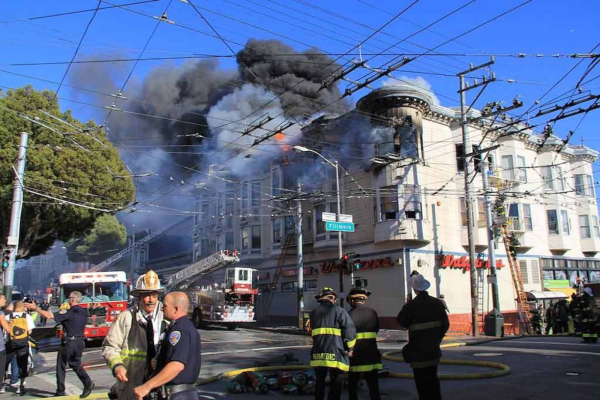
and another at Haight and Fillmore the week before. Here's where to go if you want to help the folks impacted by that one.


Haighteration
As rain and cool temps send us indoors, we light candles and fires, cook more and use heating devices, which are in varying conditions re: safety. The San Francisco and  individual and cooperative Marin Fire departments have tips for keeping you, loved ones and property safe. 

Keeping vegetation trimmed and green around your home is still a good idea, as is not letting trash and debris pile up inside or outside your property.  Building or remodeling with fire resistant materials is wise also.
Southbayhomestyles.com

and of course, smoke and carbon monoxide alarms, while they can be annoying when you burn the toast, are the best bet for saving lives, so keep those batteries fresh!

Friday, September 2, 2011

Shake-y Shake-y Part 2

OK, now we can turn back to seismic subjects, now that Hurricane Irene has spared my daughter, and the time for earthquake weather is approaching. Though there is little data to support this concept, the especially warm weather that we typically get in September and October often feels a little ominous to me. I guess this is because in my lifetime, both earthquakes and fires have occurred during these periods of stillness or offshore (Diablo- devil) winds that come when the summer fog wall loosens its grip. 


Purdue University
Back to fire danger later. In the context of real estate here and our ongoing bio-geographic risk assessment, the overall message (that most of us have gotten already) is that we live in an earthquake prone locale. "The Bay Area straddles the boundary where two of the Earth’s largest tectonic plates meet and slowly move past one another. When boundary faults break and the North American and Pacific Plates lurch past each other, quakes occur." Most of us have heard of the San Andreas and the Hayward faults, which are the biggies, and there are lots of others. 


KVEC
Earthquake insurance is expensive and limited. Before purchasing property here you'll want to look at the hazard maps for property location. Also look at the foundation and type of construction of the building. Putting Down Roots in Earthquake Country, and the Bay Area Governments Earthquake and Hazards Program are worth a look for sure. 


When you are looking at condo's with high HOA dues, find out what they include. Typically they include building insurance among other things. Sometimes they are high due to earthquake insurance, which some buildings do not carry due to high cost and high deductibles.


USGS


Beware especially the brick foundation. If it has not been seismically retrofited, or replaced, you will want to have an engineering inspection done during your inspection period and get an estimate of what it will cost to bring the building up to code. Some homeowners take the opportunity to add a garage when they do this, which adds quite a bit of value, especially in certain neighborhoods. Parking can be so precious, especially in the city, but also on many steep, narrow, twisty roads in Marin. Of course this requires a permit, and is not cheap. 


For now though, wishing you all a safe, restful, fun holiday weekend, sans natural disasters!


Allaboutnews


Saturday, August 27, 2011

Extreme Weather and Real Estate


Inhabitat

Well, hurricanes seem to have supplanted earthquakes in urgency level for me, particularly since my daughter is in Brooklyn.  Thankfully, she is not living in an evacuation area.. Though I usually focus on the golden gate here, it's clear it's all one planet when it comes to weather and loved ones. Its also clear that real estate concerns seem pretty trivial when lives are in danger, so my prayers are with everyone encountering extremes of all kinds, all over this magnificent globe.

Tree Hugger

Meanwhile, in today's risk assessment for real estate (excellent distraction for a the worried Mom in me) we have more maps  (yay!) of San Francisco and Marin to identify potential danger zones for flooding, which is obviously very bad for property value and building health. Flooding here at the golden gate could be caused by a tsunami or by a severe winter storm and may be exacerbated by high tides/heavy rain/dam failure/pipe failure or any combination thereof.  When purchasing property in historically flooded areas, you'll want your inspectors to alert you to any residual damage or moisture that could continue to have negative impact on the building.


Museum CA

The good news is that to some extent one can predict areas of greater or lesser vulnerability to inundation, (hint: water flows downhill)  and though of course all bets are off in the big picture of climate change, still there are many areas of higher ground to consider in your real estate search. The tough trade-off  for so many of us who love the sea, is that property near the water comes with the possibility it will become property IN the water.


SF Dam Failure Inundation Zones

SF Tsunami Inundation Maps

Marin County Tsunami Inundation Maps

Tsunami Risk Zone (scroll down for the map)

FEMA Map tools This is a huge data set, and requires a fast internet connection, but you can make your local map and save it. Companies like JCP will put this, and some of the data above, in a disclosure package which the Listing agent will have to offer interested buyers, but if you are the kind who'd like to take a look before you formally inquire about a specific property, this can be worth the effort.


livescience


Thursday, August 4, 2011

Historic or Sustainable?

A wise friend, historic landscape architect and preservationist, once pointed out that sustainable and historic are often one and the same. This was rather an epiphany for me at the time, though it is kind of obvious when you think about it.

Earlier, more vernacular architecture was built with local materials (no carbon intensive trips around the world for your granite counter tops) and located in the more comfortable locations for living.  This often meant close to water, with shelter from wind and exposure to sun in cooler climates, and protection from sun and exposure to breezes in hotter climates.


Towerbooks

Hence the early settlement of North Beach and Mission Dolores. In Marin you find similar early development near water in the sheltered Ross Valley, in the "banana belt" in Sausalito etc. Old ranches are usually in the lee of hills near creeks, and of course the Ohlone chose choice spots to move to on a seasonal basis.  I sometimes long to emulate them this foggy summer.

SC Museum of Natural History

The more a homes location and orientation is adapted to the climate and topography, the less energy is required to keep its occupants comfortable. Things as simple as double hung windows for control of circulation of air, and deep eves for protection from sun and rain also mitigate energy costs significantly.


Marin County Library


As the more desirable spots were taken, with the rapid growth of SF and surrounding areas prompted by the  gold rush, homes were built across the landscape, heedless of slope and orientation, and that's a subject for another post.