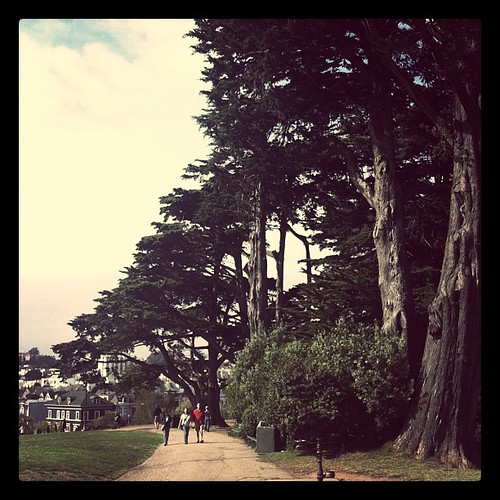
Tuesday, January 31, 2012

Natural Hazard Disclosures

Free stock photography

Making an offer or going into contract on a property in California, and especially in San Francisco, your first  major document review will be of the (sometimes an inch thick) property "disclosures".  Some listing agents will request a signed disclosure package be submitted with the offer; in any event the signed document is often due quite early in the contingency period.


Schooner Property
In the rush of putting in an offer, it is easy to skim this dense document without really comprehending what's in it. Fear not! This is one place your agent can really offer value, helping  you to filter the truly property specific information from what is boiler plate legalese, so you'll know what is really important to understand before you commit to a contract and start spending money on inspections. 


Liquefaction Hazard Maps

Of most relevance to this blogger, as your earth based realtor, is the Standardized Natural Hazard Disclosure Report, which details the possible risk of floods, fires, earthquakes, liquifaction, and landslides occurring at the  property. At the risk of sending you to a competitor, here's a link to a nice summary of how to review the Natural Hazards report. When a property is listed, the agent orders this report from one of several companies that search the hazard maps and lists the hazards that are potential issues with that specific property. Also, there is the Combined Hazards Book, which you'll need to review and sign off on during escrow.


Disclosure Booklets

 If you are the kind of person who likes to educate yourself ahead of time, you can look at hazard maps yourself (see links in my past posts re: slope and extreme weather  and also in the resource bar) for the areas you are considering. Ponder your level of comfort with various environmental risks, do a little insurance research, and you'll feel more prepared to make an informed purchase.


Putting Down Roots in Earthquake Country

Thursday, January 19, 2012

Rain at last!

Wow, its been so long since it rained that the actual reality of wetness is rather a surprise. Time to unearth the umbrella and wellies.  Also, if you live in San Francisco, it's a great time to consider rainwater harvesting, because the city has a great offer right now.


Rainwater Harvesting
 
While supplies last, San Francisco residents, businesses and schools can get discounts of 30-60% off 60-gallon rain barrels and up to $640 off cisterns through the cities Discounted Rain Barrel and Cistern Program.

MMWD

In Marin, Marin Municipal Water District is offering classes, and has some helpful links on their webpage re: Rainwater Harvesting. Since we can't know how much rain we will get from this storm, conservation is surely a wise thing. 


I've been watering my pots in January, which just feels wrong. So glad it is raining. Careful out there on the slippery roads folks!


Monday, January 16, 2012

Personal Microclimate

I visited some friends today who live in a beautiful east/west running valley in West Marin. It was wonderful to be with people as attuned to (obsessed with?) microclimate as I am. Being in a valley, they are very attuned to their location, and how it affects how much sun they get at this time of year. Their property is on the south facing slope, a few hundred feet up from the creek, and because of the direction the valley runs, they are largely spared the prevailing (cold) NW wind. Their neighbors a few houses down at a lower elevation get much less sun and are more prone to frost, since the cold air flows down the valley.


Beyond the overall issue of warmth and energy use, microclimate preference is a somewhat personal thing. If you like being an early riser you'll like an eastern exposure, especially for bedroom and kitchen. If you are a later sleeper, and/or like your home flooded with light during cocktail hour, you may prefer a western exposure. If you like to cook using herbs and vegies from your garden, you will love a walk out terrace or garden to the south, and if you are an artist and like the cooler, more consistent light from the north, you'll like your studio facing that way. If you are particularly sensitive to cold you'll want a southwest exposure.
Cats have this microclimate thing DOWN

In the city, a full floor flat would be lovely, so light from all directions would fill your home at different times throughout the day. In a single family home you'd need to be on flat terrain, or the top of a hill to be exposed to all the directions. Of course, other buildings and trees can also act like hillsides and block your sun exposure.


Armaclad Windows

Now's the time, I say again, to go look at the neighborhoods you are considering, at say, before 10 and after 2, and see where the sun is. There's not much that is sadder than finding out you live in a shadow 6 months out of the year, AFTER escrow has closed, the movers have driven off and the kids have started school.


Saturday, January 7, 2012

Right Tree, Right Place: PG&E and Trees

So it is still dry and breezy.  This fire season in January has me thinking of urban trees again. Here is guidance from PG&E's perspective re: planting distance from power lines, based on mature size of tree. "Proper tree and site selection provide trouble-free beauty and pleasure for years to come."


Below we see the consequences of "improper" tree and site selection.  Prunicide. 


Prunicide


Here are some happier trees in SF.


Divergence
Friends of the Urban Forest has a lot of great resources for happy trees in San Francisco. Much of the info applies to more developed areas of Marin. Of course there's more to consider than power lines such as neighborly relationships